2026 National Nuclear Energy Public Opinion Survey: How to Strengthen Record-High Favorability to Nuclear Energy: Latest Survey Offers Tips
Ann Stouffer Bisconti, PhD
Bisconti Research, Inc.
May 2026
Highlights
In this time of high concern about energy, the 2026 National Nuclear Energy Public Opinion Survey finds favorability to nuclear energy back at a record high:
77% favor nuclear energy vs. 23% who are opposed.
30% strongly favor nuclear energy vs. 5% who strongly oppose—that’s a 6-to-1 gap among those with strong opinions.
44% believe that public opinion toward nuclear energy is becoming more favorable, compared with 27% who believe it is becoming less favorable, and 29% who think it is unchanged.
58% have a favorable impression of the nuclear power plants closest to where they live and the way these plants have operated recently, compared with 22% who have an unfavorable opinion; 21% have no impression.
70% would find it acceptable to add a new Small Modular Reactor next to one of the nuclear power plants nearest to where they live.
All these findings show positive trends in support of nuclear energy, but those taking middle positions (fence-sitters) still make up the majority. The survey reveals strategies for moving fence-sitters to more firmly favorable opinions.
The public sees nuclear energy as important, but gaps in public awareness show a need for communications. The survey found that words alone are insufficient in this time of distrust[1]. A question-and-answer format, with answers supported by reference data, is more persuasive.
The new national survey was conducted from May 4-10, 2026 by Bisconti Research, Inc., using a nationally representative sample of 1,016 respondents drawn from the Quest Mindshare Online Panel of 3.5 million people in the U.S. The margin of error is plus or minus 3 percentage points.
Favorable Attitudes
Since 1983, the proportion of the U.S. public in favor of using nuclear energy has grown from about half to about three-fourths, reaching a record high in 2026.
Favorability to Nuclear Energy 1983-2026
Overall, do you strongly favor, somewhat favor, somewhat oppose, or strongly oppose the use of nuclear energy as one of the ways to provide electricity in the United States? (% strongly + somewhat)
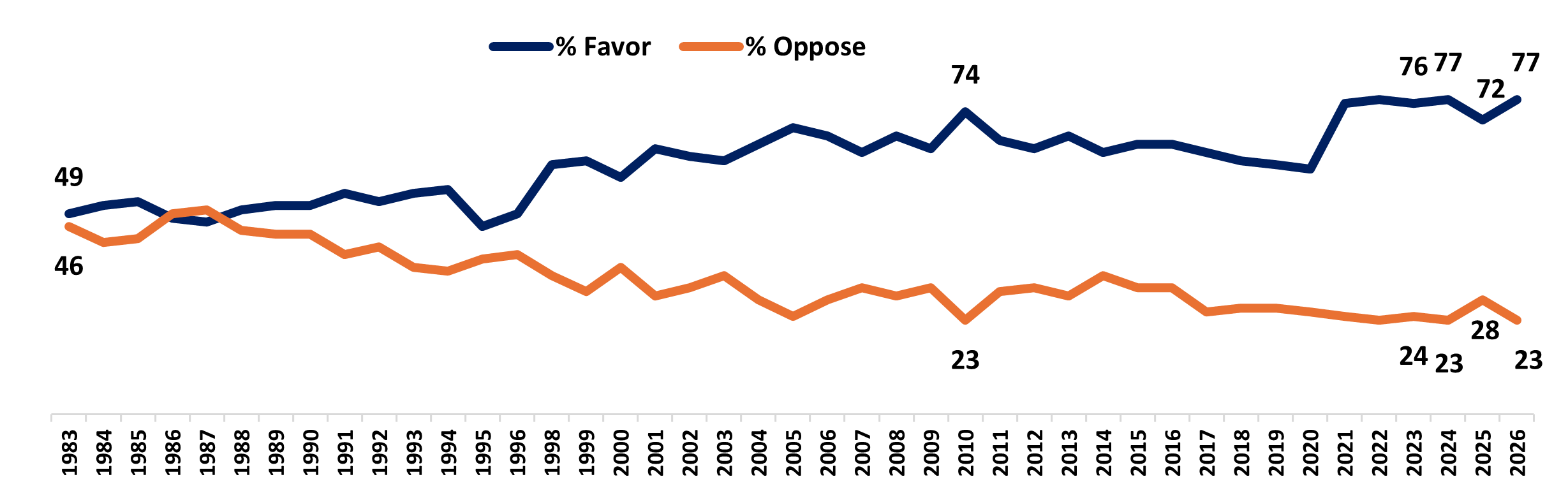
Opinions are not polarized. The myth of polarized public opinion about nuclear energy is a thing of the past. A majority of Americans are fence-sitters on nuclear energy—they somewhat favor or somewhat oppose nuclear energy, with more leaning favorable. Among persons with a strong opinion, those in favor of nuclear energy now outnumber those opposed by a 6-to-1 margin.
Strongly Favor and Strongly Oppose Nuclear Energy 1983-2026
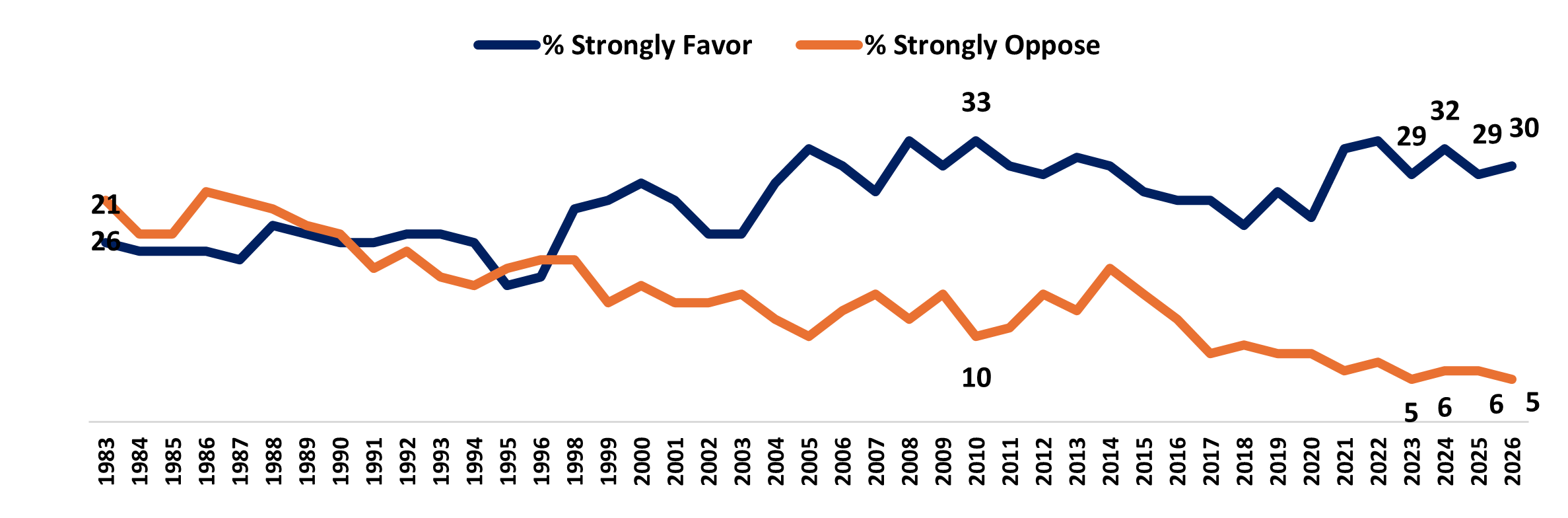
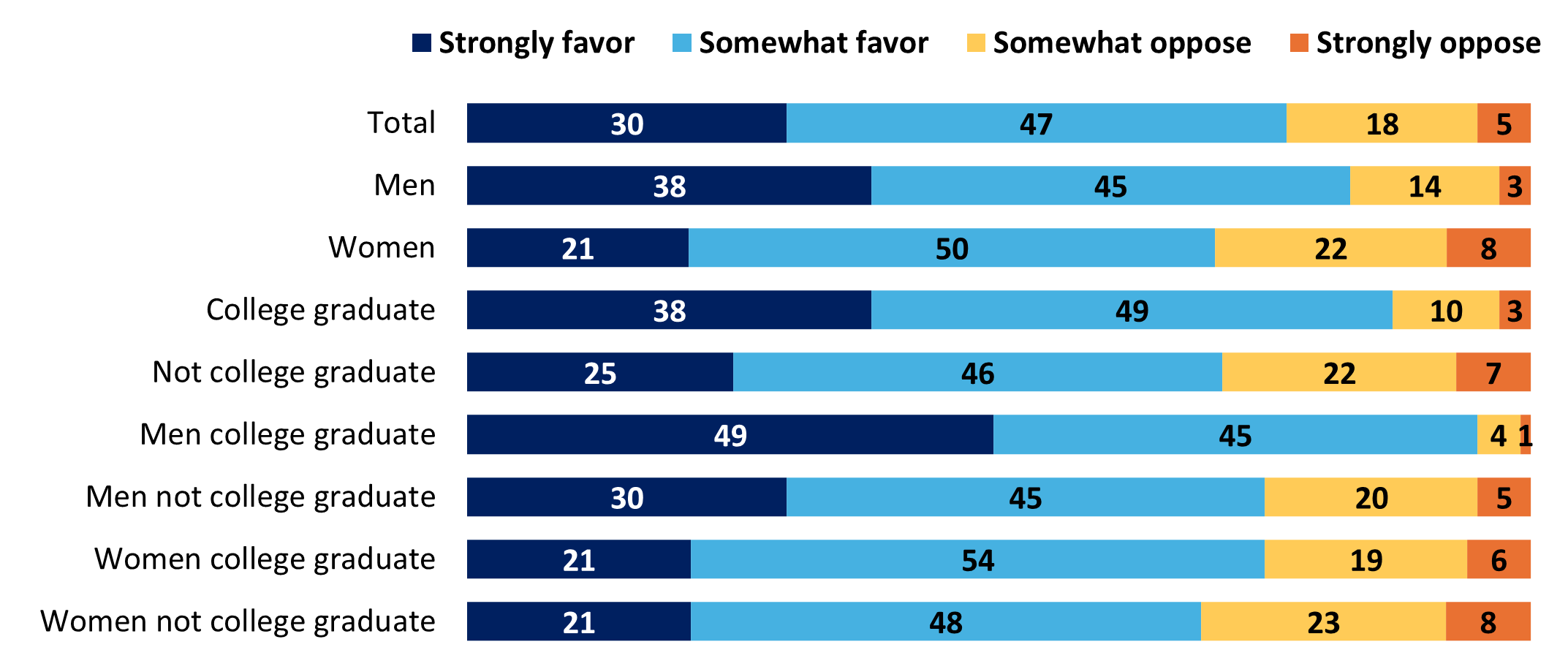
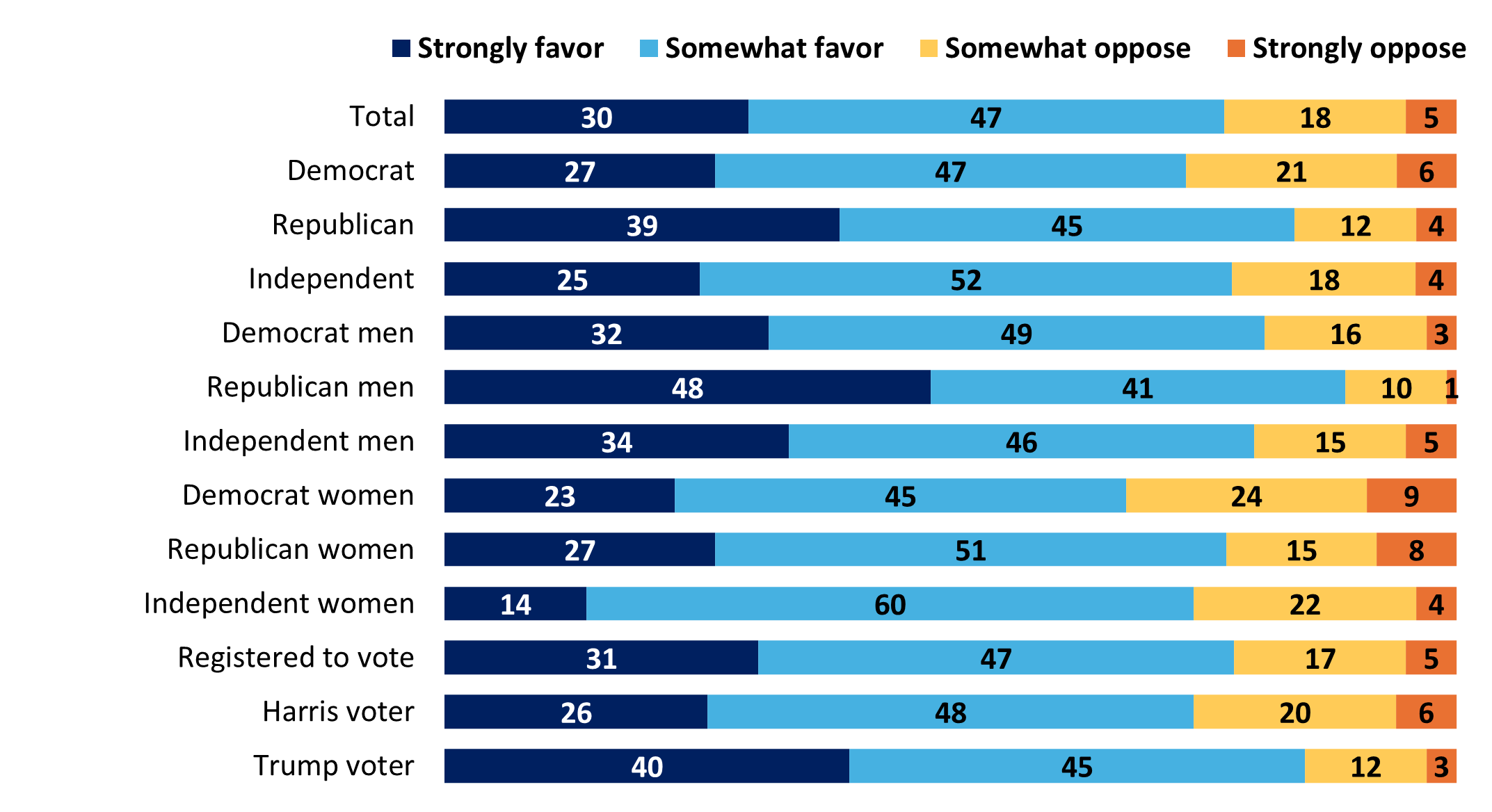
This pattern holds true across demographic groups. More men, college graduates, and Republicans strongly favor nuclear energy. The standout supporters are men who are college graduates or Republicans. Few in any demographic are strongly opposed—in all cases, less than 10% strongly oppose nuclear energy.
Favorability to Nuclear Energy by Gender and Education
Overall, do you strongly favor, somewhat favor, somewhat oppose, or strongly oppose the use of nuclear energy as one of the ways to provide electricityinthe United States? (%)
Favorability to Nuclear Energy by Political Affiliation
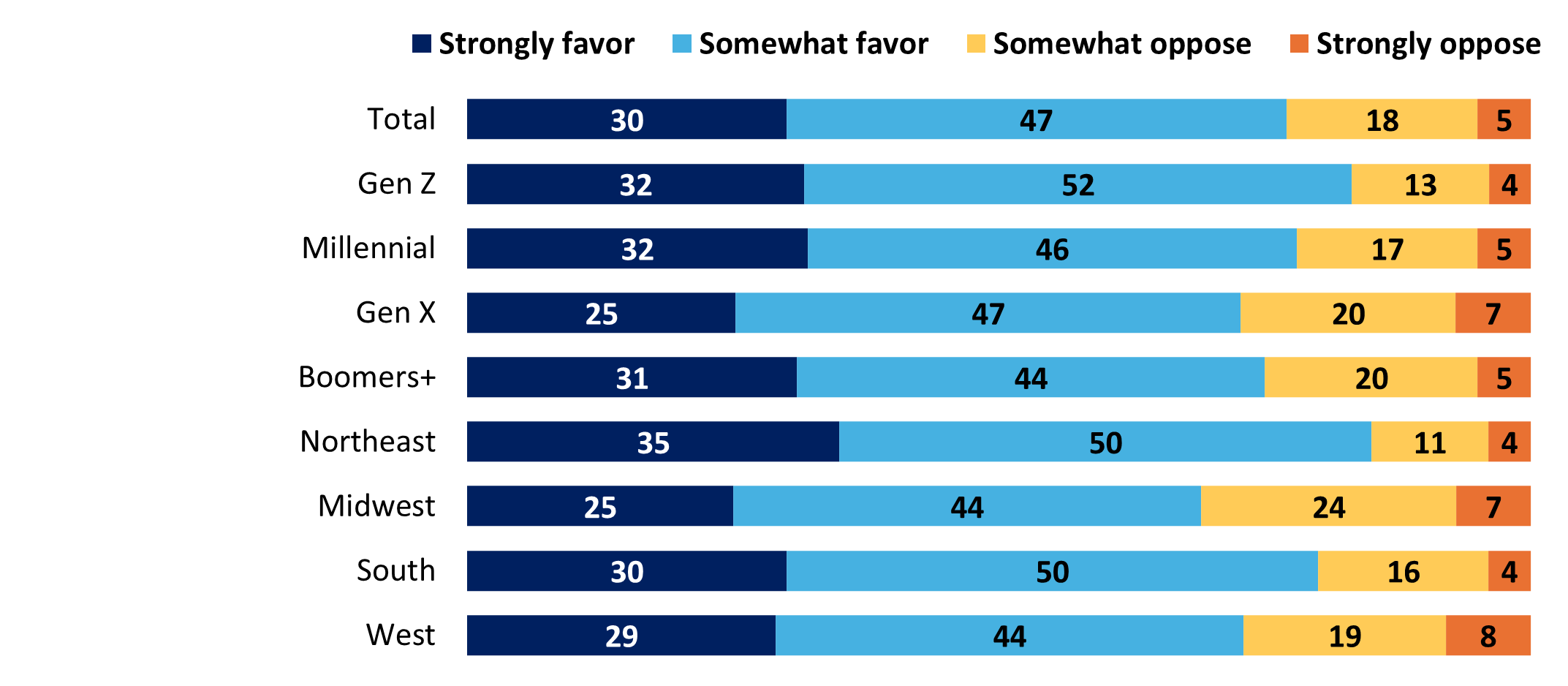
There are few notable differences by age or region. Gen X continues to include more fence-sitters. Gen Z and Northeast residents are slightly more favorable.
Favorability to Nuclear Energy by Age and Region
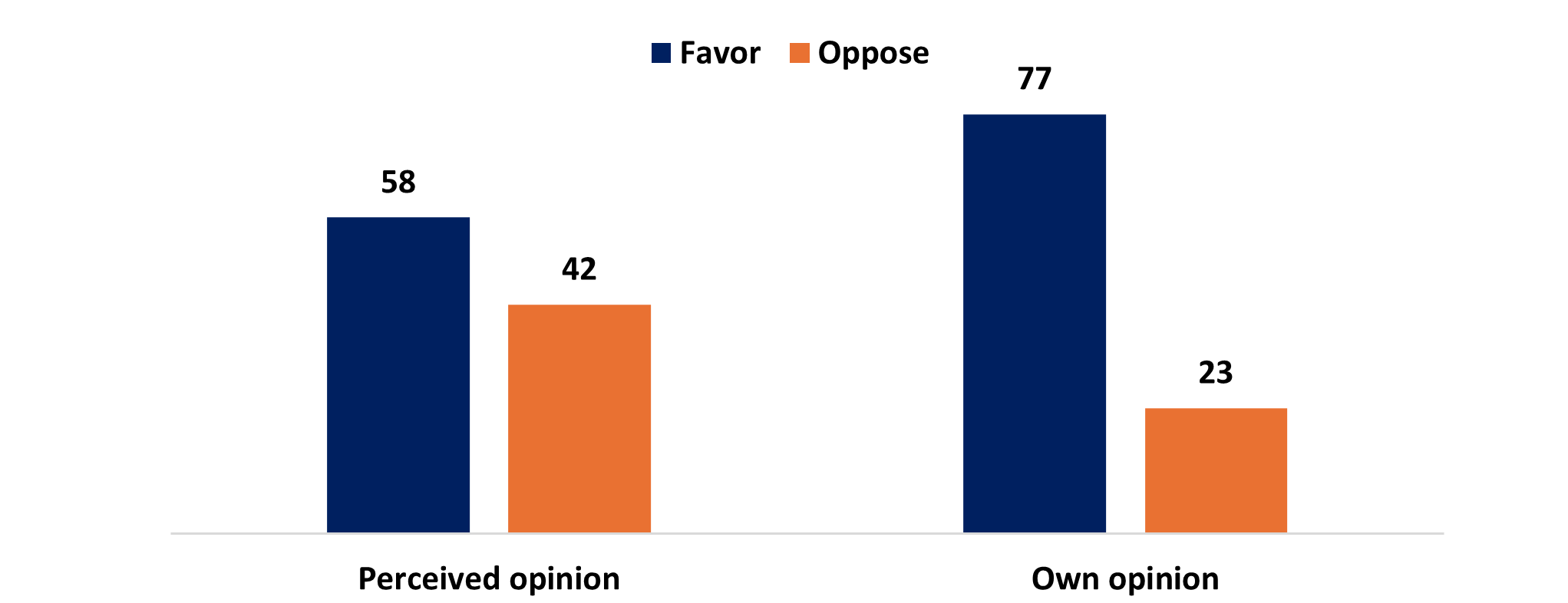
Perception gap remains. A perception gap still exists. Many people think that community opinion about nuclear energy is less favorable than their own. While 77% personally favor nuclear energy, fewer (58%) believe that the majority of people in their community share this view. This perception gap shows that stigma continues to attach to nuclear energy.
Perception Gap: Perceptions of Public Opinion Compared with Actual Opinion (2026)
Do you think the majority of people in your community favor or oppose nuclear energy? (%)
Overall, do you strongly favor, somewhat favor, somewhat oppose, or strongly oppose the use of nuclear energy as one of the ways to provide electricity in the United States? (%)
The public increasingly sees public opinion becoming more favorable to nuclear energy (44% in 2026).
Public Believes Public Opinion About Nuclear Energy is Becoming More Favorable (2025 and 2026)
Based on what you hear or see, do you think that U.S. public opinion toward nuclear energy is becoming more favorable, less favorable, or not changing at all? (%)

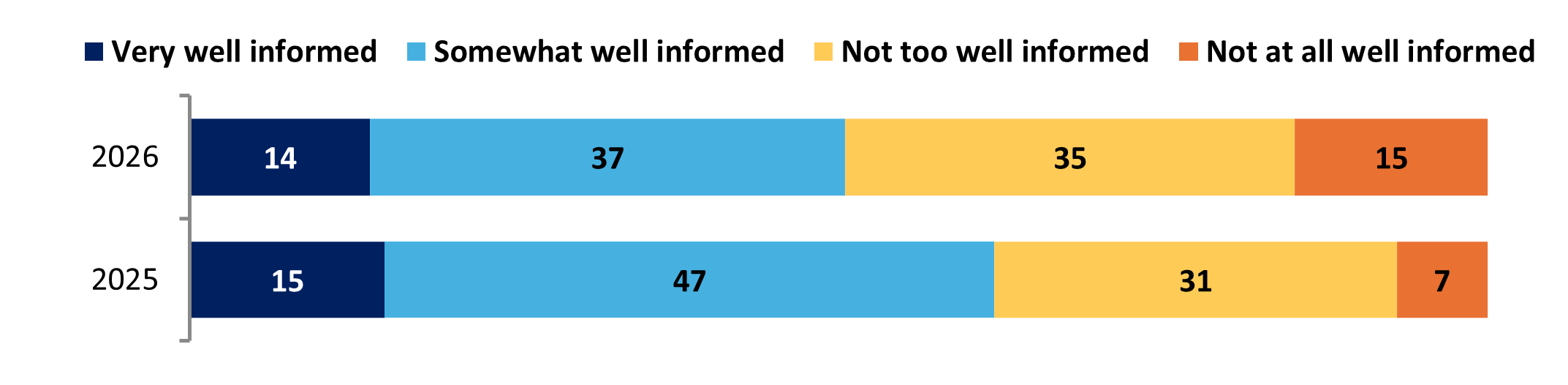
More informed, more favorable. One of the reasons why so many Americans take middle positions on nuclear energy is that they don’t feel very well informed about this energy source. In 2026, only 14% feel very well informed on the topic, 37% somewhat well informed, 35% not too well informed, and 15% not at all well informed.
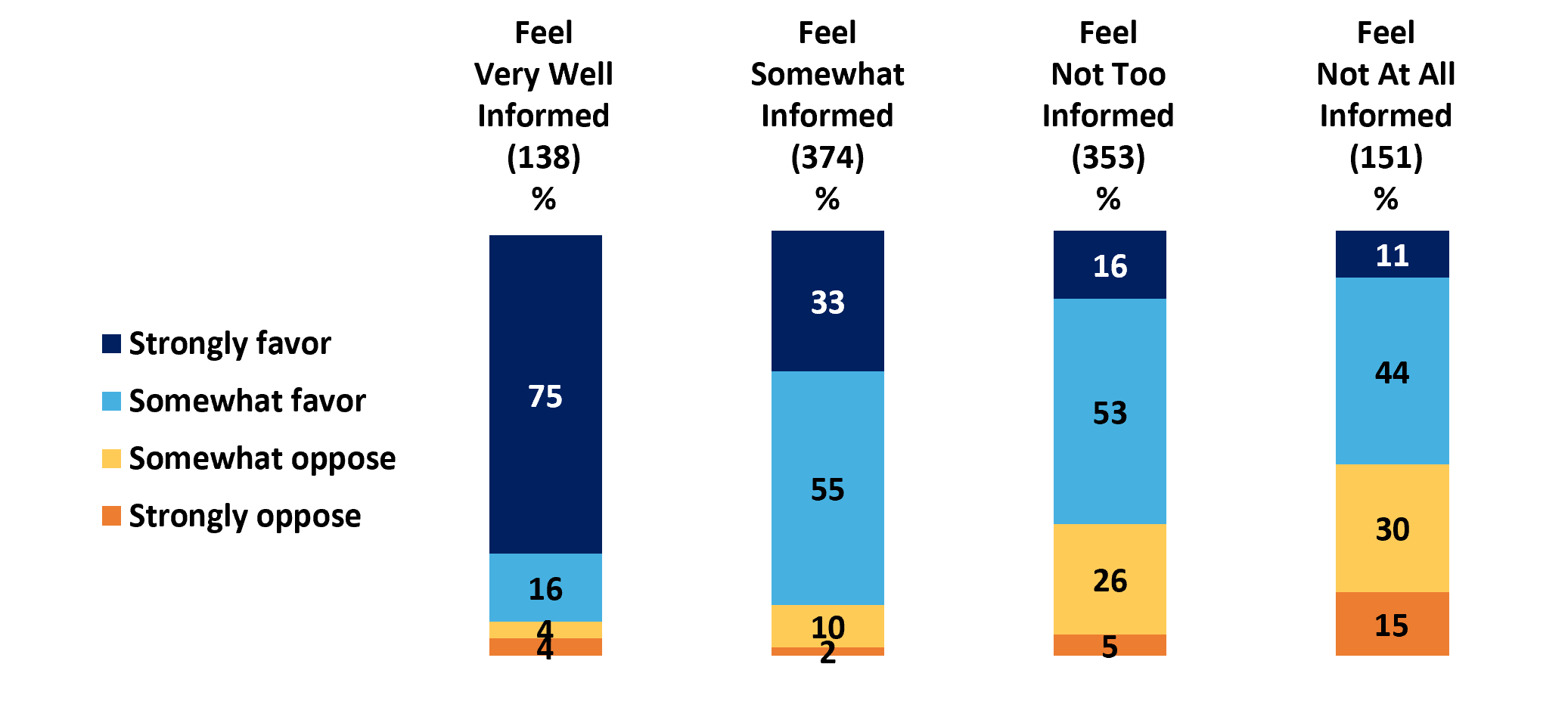
The correlation between the level of feeling informed about nuclear energy and attitudes toward nuclear energy continues to be strong. Among those who feel very well informed about nuclear energy, 75% are strongly favorable and only 4% are strongly opposed.
Feel More Informed, More Favorable (2026)
How well informed do you feel you are about nuclear energy?
Overall, do you strongly favor, somewhat favor, somewhat oppose, or strongly oppose the use of nuclear energy as one of the ways to provide electricity in the United States?
Despite this close correlation, the survey also reveals that Americans feel less well informed about nuclear energy than they did one year ago—and yet they are more favorable to nuclear energy in 2026 than they were in 2025. As energy discussions raise the profile of nuclear energy, more Americans may recognize that they are not as well informed about nuclear energy as they would like to be—thus moving from “somewhat well informed” to “not too well informed” and “not at all well informed.”
Informed about Nuclear Energy (2025-2026)
How well informed do you feel about nuclear energy? (%)
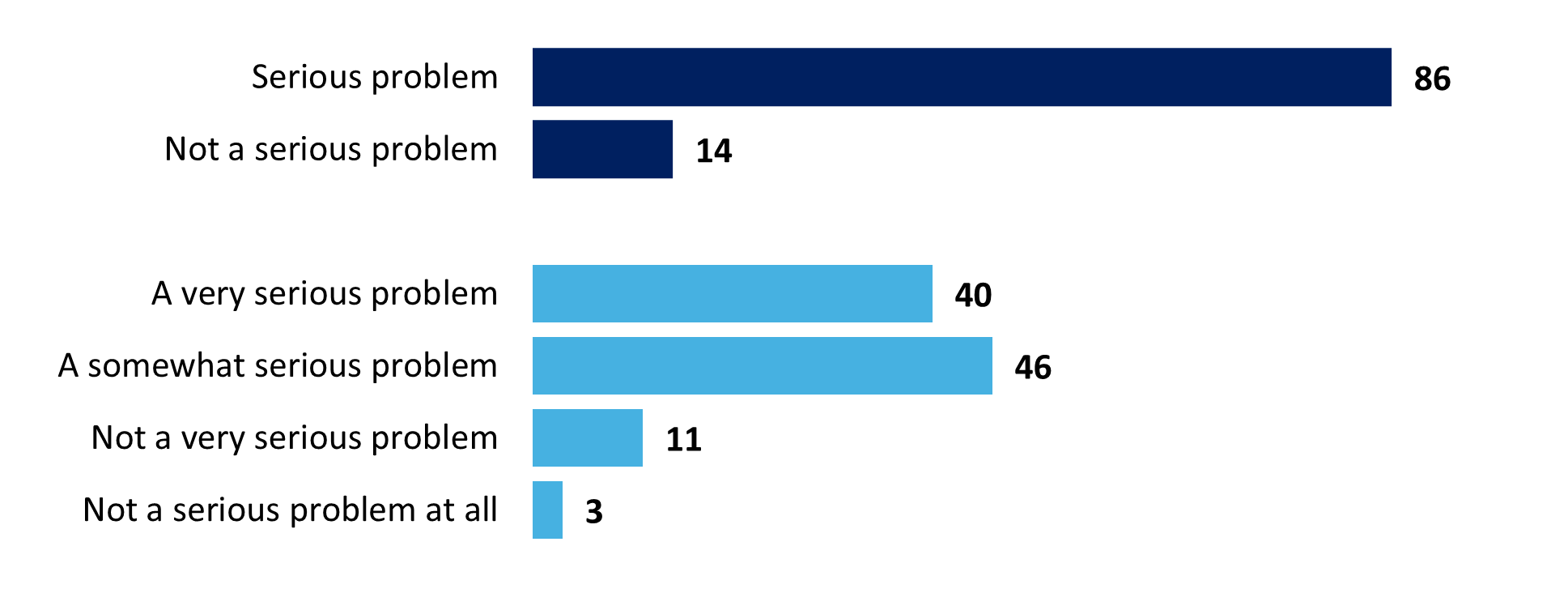
Energy now a major concern. Historically, support for nuclear energy is highest when energy concerns are also high. Today, 86% consider energy a serious problem, and 40% say the problem is very serious.
Seriousness of Energy Problem (2026)
Considering problems facing the United States, would you say that energy is…? (%)
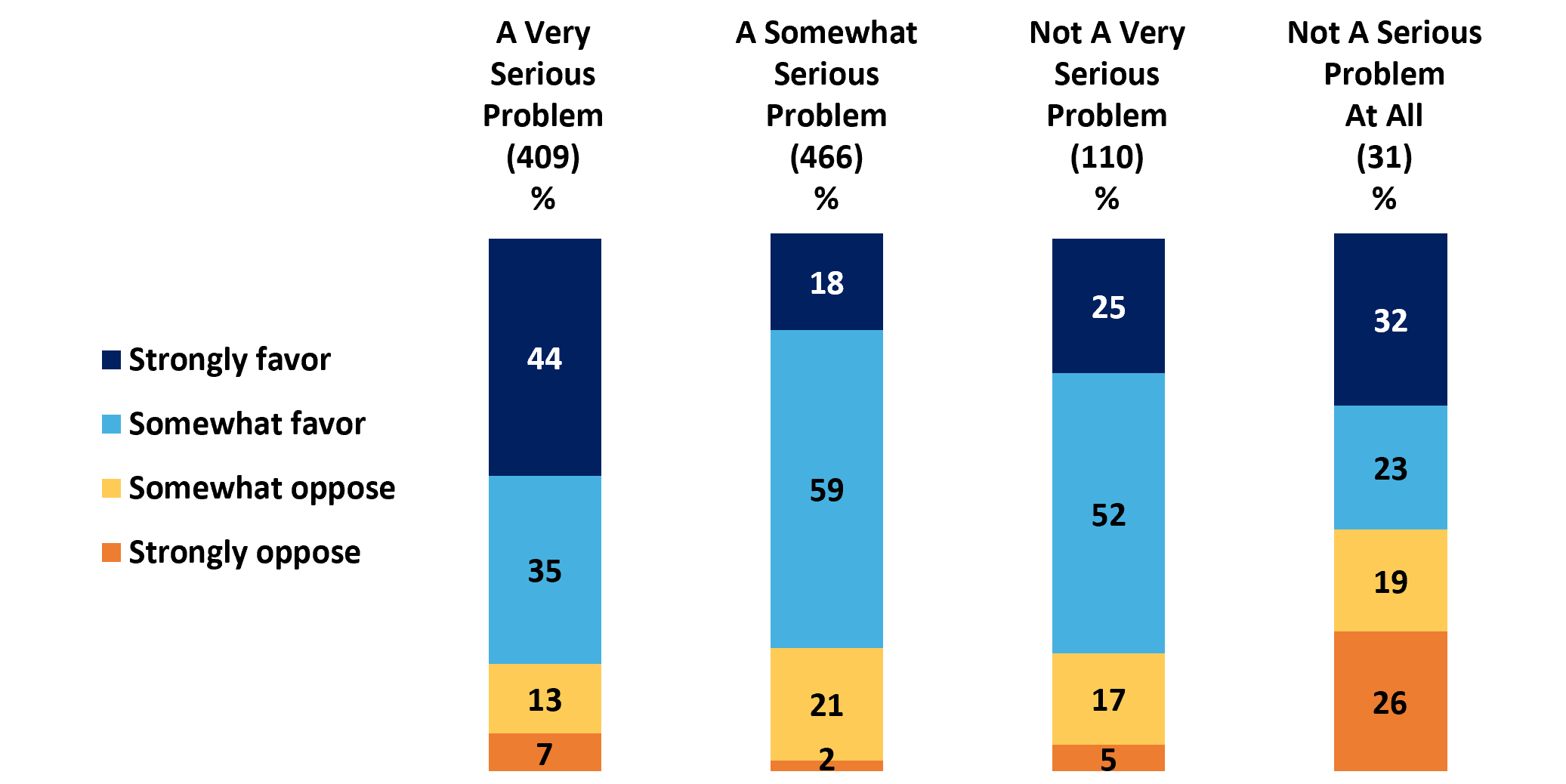
Of those who say energy is a very serious problem, 44% strongly favor nuclear energy. Among all others, just 20% strongly favor nuclear energy. The small group of respondents who believe that energy is not a serious problem at all includes a double-digit percentage who strongly oppose nuclear energy. See next page.
The More Energy is Seen as a Serious Problem, the More Favorable to Nuclear Energy (2026)
Considering problems facing the United States, would you say that energy is…?
Overall, do you strongly favor, somewhat favor, somewhat oppose, or strongly oppose the use of nuclear energy as one of the ways to provide electricity in the United States?
Nuclear energy seen as important. Underpinning favorable attitudes to nuclear energy is the widely held belief that nuclear energy will be important in meeting the nation’s electricity needs in the years ahead. That belief has remained quite steady, even while support has fluctuated. Today, 87% of Americans believe that nuclear energy will be important in meeting this nation’s electricity needs in the years ahead—40% say nuclear energy will be very important.
Importance of Nuclear Energy in Meeting this Nation’s Electricity Needs
How important do you think nuclear energy will be in meeting this nation’s electricity needs in the years ahead? Do you think nuclear energy will be very important, somewhat important, not too important, or not important at all?

Reasons for opinions. Respondents were asked in an open-ended question the reasons for their opinion of nuclear energy. Although positive attributes of nuclear energy were mentioned, none stood out to a majority. Those opposed expressed largely a generalized sense of danger.
Reasons for Opinion of Nuclear Energy (2026)
What are the main reasons for your opinion of nuclear energy? (% based on total sample of 1,016)

The main favorable reasons given were clean/no pollution/no greenhouse gases/climate change, low cost/affordability, and reliability/consistent/dependable. Additional favorable mentions included less environmental impact, efficiency, energy security/energy independence, and jobs.
The main unfavorable reasons given were mostly about safety concerns, followed by mentions of waste, accidents, and radiation.
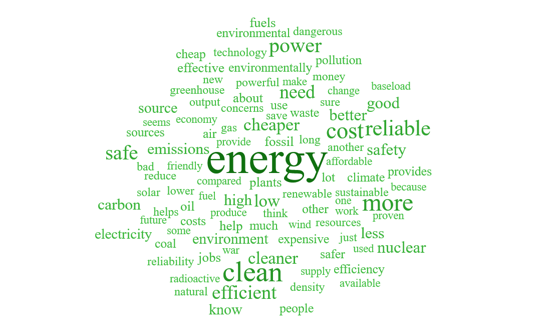
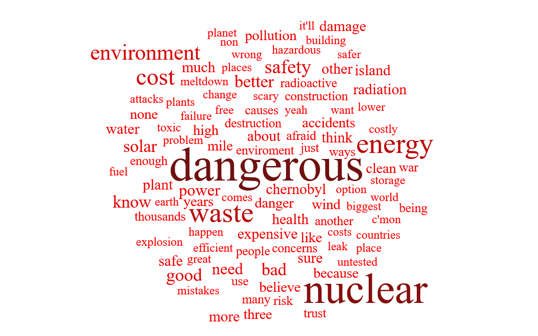
Words. Word clouds show the language respondents used to discuss reasons for their opinions. For those who favor nuclear energy, the word energy stands out—followed by clean, reliable, cost, more, and need. For those who oppose nuclear energy, the word dangerous stands out. Other words include nuclear, energy, and waste.
Reasons for Opinions on Nuclear Energy (2026)
What are the main reasons for your opinion of nuclear energy?
Those Who Favor Nuclear Energy
Those Who Oppose Nuclear Energy
Support for Action: License Renewal and New Plants
In this survey, support for license renewal remained near consensus and support for new plants returned to record high levels. While the overall agreement with key actions is broad, it is not as deep as it could be. The significant numbers who agreed “somewhat,” especially on whether we should definitely build more plants, is another manifestation of public mushiness regarding this topic about which most feel not well informed.
87% support license renewal. Since the question was first asked in 1998, opinions about license renewal for “nuclear power plants that continue to meet federal safety standards” have been widely favorable. License renewal of nuclear power plants is viewed as similar to renewing a driver’s license. In both cases, continued safety is required. The numbers today show near consensus support.
Support for Renewing the License of Nuclear Power Plants that Continue to Meet Federal Safety Standards (1998-2026)
How much do you agree or disagree: When their current operating license expires, we should renew the license of nuclear power plants that continue to meet federal safety standards. (%)

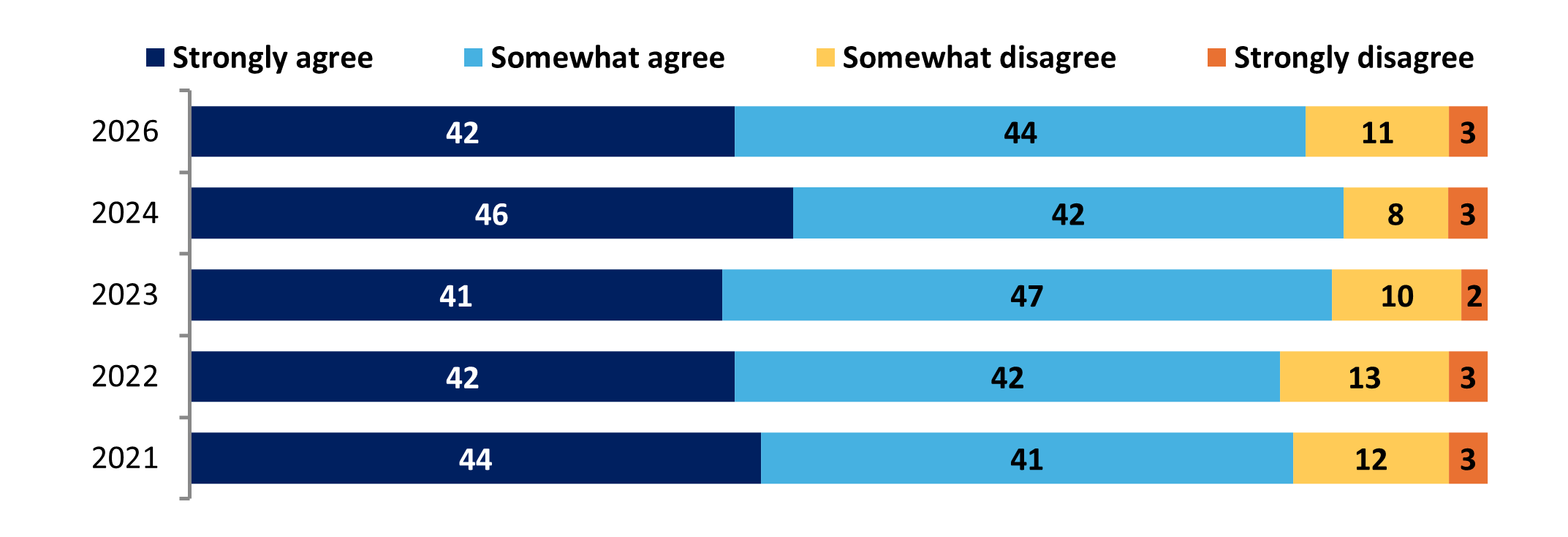
85% support preparation to build. Wide agreement also is seen on the question of preparing to build more plants. See next page.
Support for Preparing for Advanced-Design Nuclear Power Plants 2021-2026[2]
How much do you agree or disagree: Our nation should prepare now so that advanced-design nuclear power plants are ready to provide electricity as needed. (%)
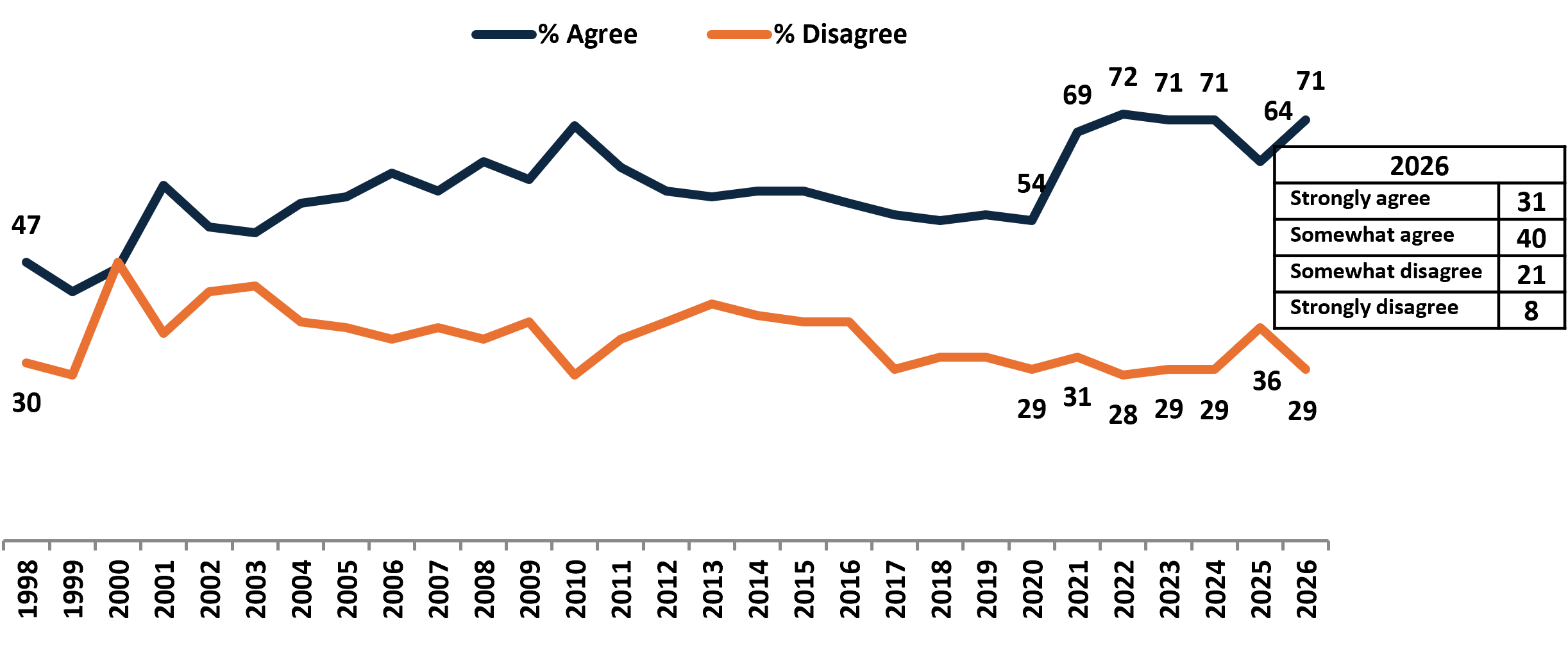
71% say definitely build. In contrast to the long-term consensus on license renewal, a high level of support for definitely building nuclear power plants in the future is new this decade. In 1998, when the question was first asked, less than half the public (47%) agreed with definitely building more nuclear power plants. Today, that opinion is held by nearly three-fourths of the public. However, there is room to firm up this opinion, as more somewhat agree than strongly agree.
Support for Definitely Building More Nuclear Power Plants 1998-2026
How much do you agree or disagree: We should definitely build more nuclear power plants in the future. (%)
New Facilities: Location is Everything
Support for a nuclear power plant in one’s area has been investigated in various surveys using different definitions for “your area.” A Gallup survey in 2026 found that 53% opposed construction of a nuclear power plant in their area.[3] We find that defining the area increases the acceptability of a nuclear power plant nearby. A person living in the middle of an urban area might not want a major industrial facility of any kind there. Nuclear plants are more likely to be acceptable at a more suitable location, such as an existing plant site. That is revealed in surveys of nuclear power plant neighbors, and this survey finds it is also true for the general public.
New reactor is acceptableat nearby plant. The current survey asked respondents:
If they had heard anything about “advanced-design nuclear power plants called Small Modular Reactors (SMRs).” Only 24% had heard about SMRs, about the same as in the 2025 survey.
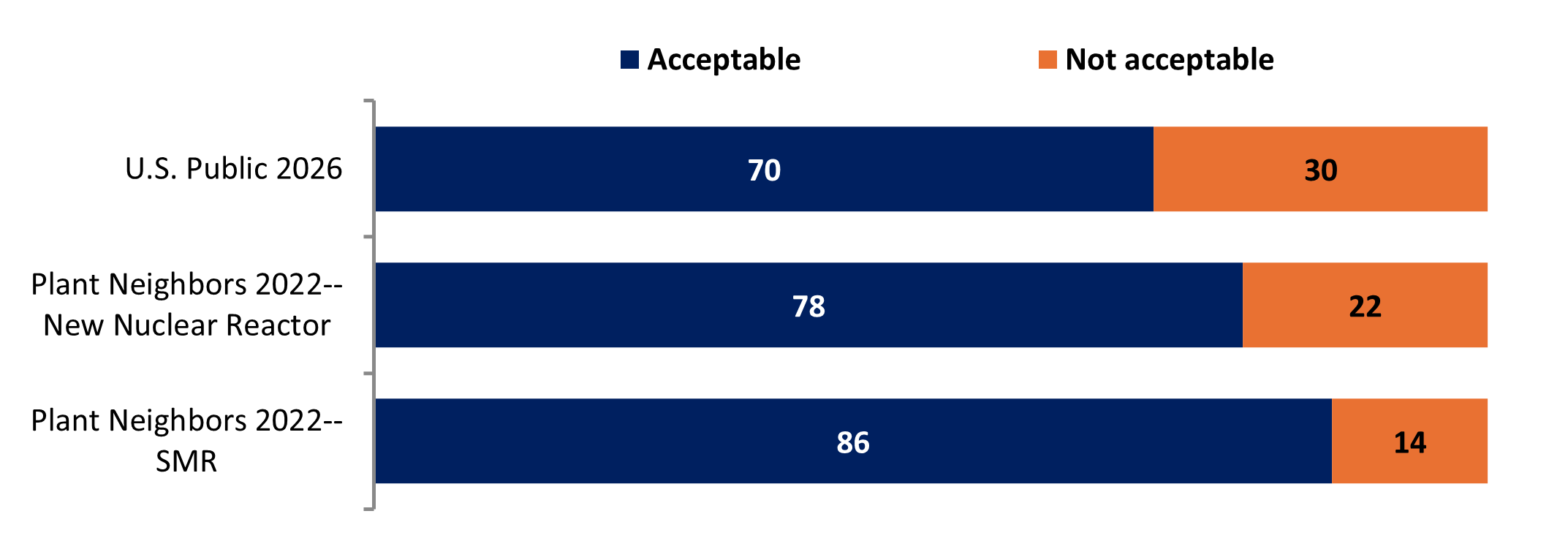
If it would be acceptable to add an SMR “next to one of the nuclear power plants nearest to where you live.” 70% said it would be acceptable to add an SMR.
When we asked a similar question in our national survey of nuclear power plant neighbors, acceptability was even higher:[4] 78% in 2022 said a new reactor would be acceptable, and 86% said an SMR would be acceptable.
Acceptability of Adding New Nuclear Plants or Small Modular Reactors (SMRs) Next to Nearest Nuclear Plant
U.S. Public 2026: Would it be acceptable to you or not acceptable to you to add a Small Modular Reactor (SMR) next to one of the nuclear power plants nearest to where you live?
Plant neighbors 2022—New Nuclear Reactor: If a new power plant were needed to supply electricity, would it be acceptable to you or not acceptable to you to add a new nuclear reactor at the site of the nearest nuclear power plant?
Plant neighbors 2022—SMR: Innovative Small Modular Reactors, known as SMRs, are a new advanced alternative for supplying electricity. Would it be acceptable to you or not acceptable to you to add a Small Modular Reactor (SMR) at the site of the nearest nuclear power plant?
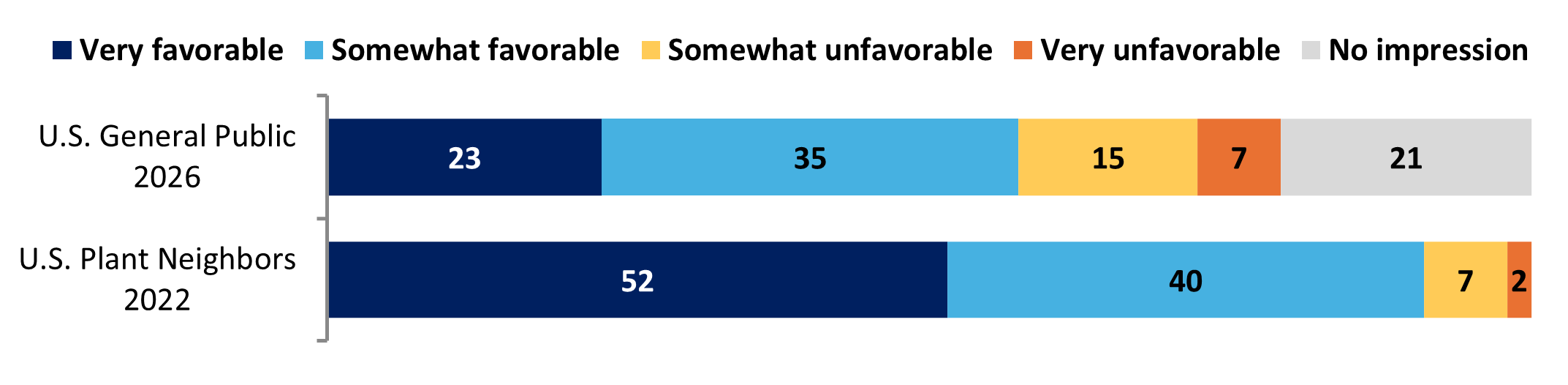
Impression of nearest nuclear power plants tends favorable. Many members of the general U.S. public do not have strong views of nuclear power plants and how they have operated recently. One-fifth of Americans have no impression at all of nuclear power plants nearest to where they live. Of those who do have an impression, 58% tend favorable, and 22% tend unfavorable.
In contrast, national surveys of plant neighbors show that their impressions of the local plants are both broadly and deeply favorable.[5]
Impression of Nearest Nuclear Power Plant
U.S. General Public 2026: Thinking of the nuclear power plants closest to where you live, would you describe your general impression of these plants and the way they have operated recently as very favorable, somewhat favorable, somewhat unfavorable, or very unfavorable?
U.S. Plant Neighbors 2022: Thinking of the nuclear power plant closest to where you live, would you describe your general impression of this plant and the way it has operated recently as very favorable, somewhat favorable, somewhat unfavorable, or very unfavorable?
Communications
The 2026 survey continued to find gaps in public awareness that show a need for communications about nuclear energy’s brand benefits. This survey investigated messages and trusted information sources for communications.
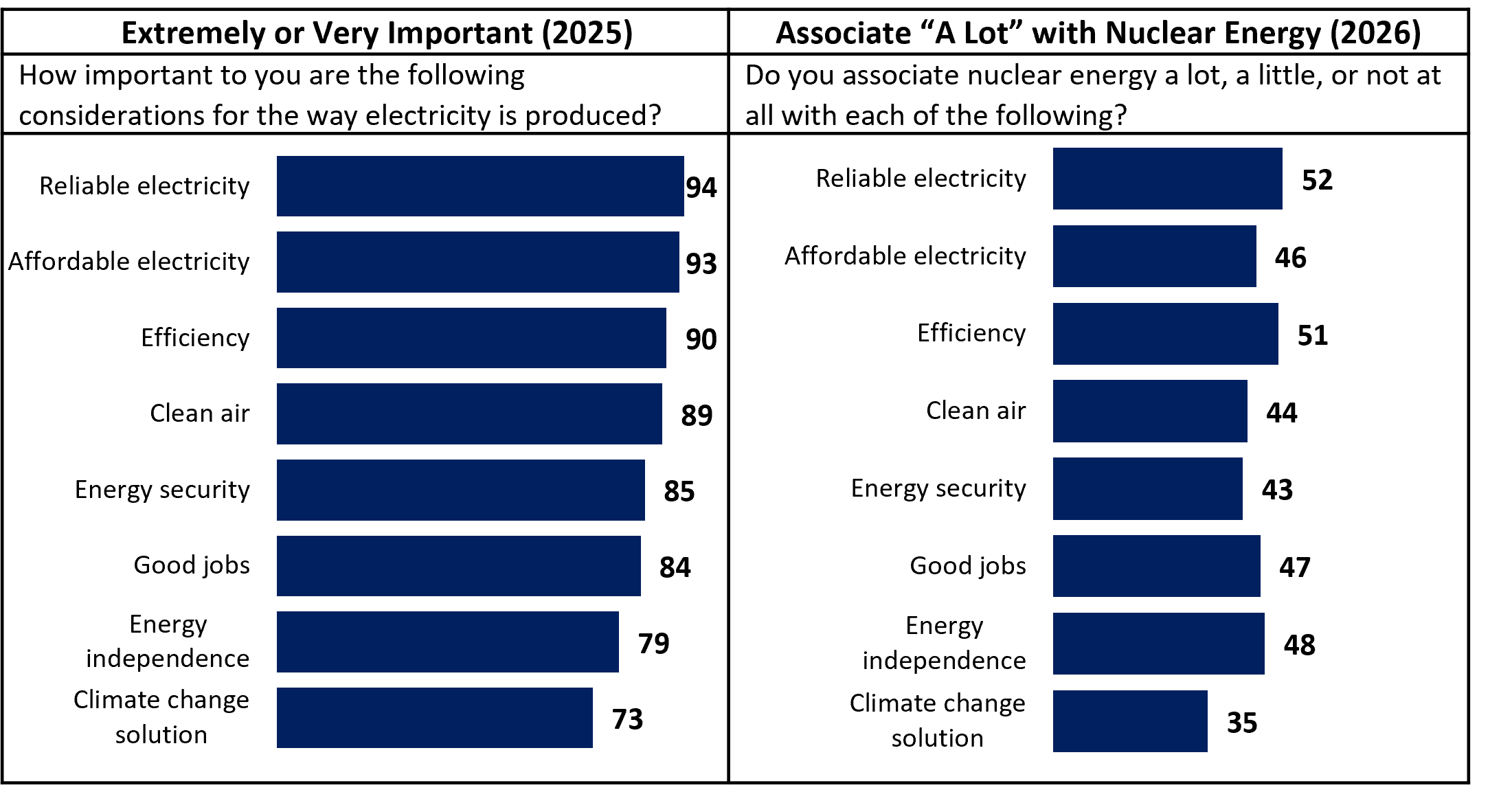
Barely half the public associates nuclear energy a lot with features of its brand. In 2025 and in previous surveys, large majorities rated 8 features of electricity generation extremely or very important. Topping that list were reliability, affordability, efficiency, and clean air. All these features are strengths of the nuclear energy brand, but when this question was asked, nuclear energy had not yet been mentioned. The 2026 survey asked respondents if they associated each of the same features with nuclear energy—a lot, a little, or not at all. The goal for the brand is to be associated with these features a lot.
The graph on the next page compares the importance people give to 8 considerations in electricity production and the extent to which these features are associated with nuclear energy.
There is significant room for improvement in building public awareness of the attributes of nuclear energy. The attributes most associated with nuclear energy are reliability, efficiency, energy independence, and good jobs. Only 44% associated nuclear energy a lot with clean air. That is striking considering that one of the reasons for the global attention to nuclear energy is that nuclear power plants are the most reliable zero emissions energy source.
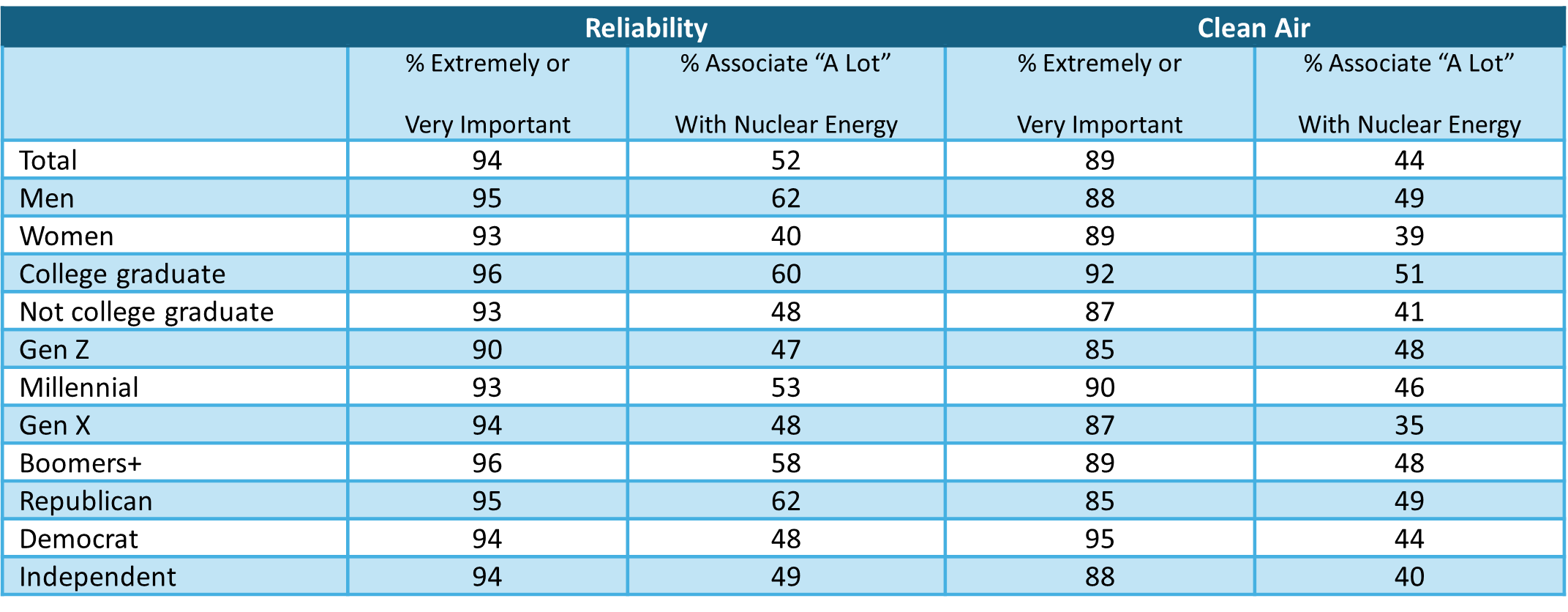
All demographic groups gave high importance to the 8 considerations in electricity production, as illustrated by the following table that focuses on reliability and clean air. The table also shows that few demographic groups include a majority who associate those considerations a lot with nuclear energy. More men, college graduates, Boomers+, and Republicans make the association between nuclear energy and reliability. GenXers are the least likely to link nuclear energy closely with clean air.
Reliable Electricity and Clean Air: Their Importance and Association with Nuclear Energy by Demographics (2025-2026)
Information impact. What makes nuclear energy unique is its combination of features: it offers both reliability and clean air. The previous National Nuclear Energy Public Opinion Survey (2025) asked respondents whether nuclear energy, hydropower, solar energy, or wind energy is the most reliable clean energy source. The order of presenting the options was randomized. Only 30% saw nuclear energy as the most reliable clean energy source. Solar energy was chosen first.
Question: Which is Most Reliable Clean Energy Source? (2025)

Next, respondents were shown a graph that answered the question with a surprising fact.
Answer: Nuclear Energy is America’s Most Reliable Clean Energy Source: Average Capacity Factors of Nuclear, Hydro, Wind, and Solar in the U.S. in 2024
Capacity factor is the percentage of electricity a power plant actually produces compared to the maximum it could produce if it ran at full power all the time. On average, the 94 U.S. nuclear power plants ran at full power at least 90% of the time every year since 2004.
Source: U.S. Energy Information Administration

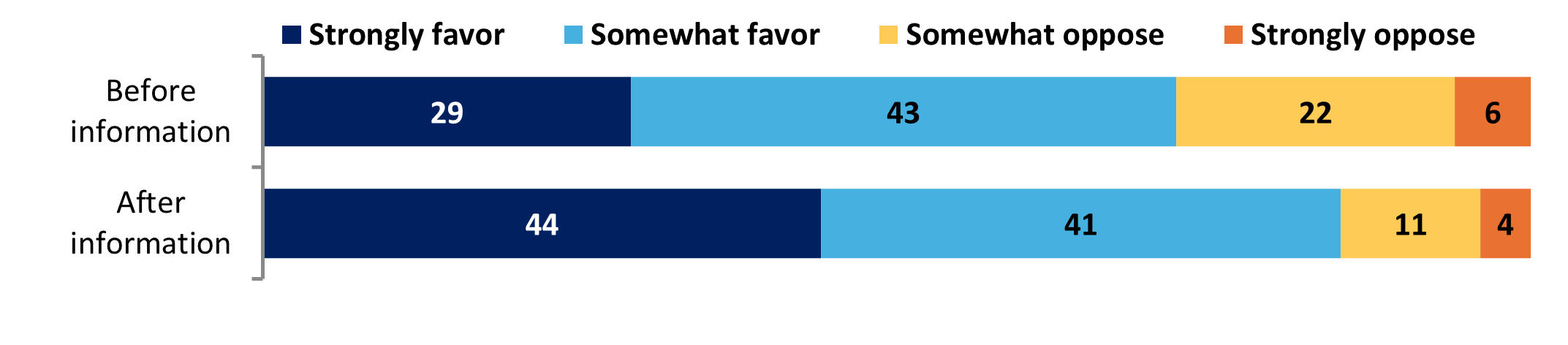
Based on this one graph, the percentage who strongly favored nuclear energy increased from 29% to 44%. Those opposed decreased from 28% to 15%.
Favorability to Nuclear Energy Before and After Seeing the Graph on Capacity Factors
Thinking again, do you strongly favor, somewhat favor, somewhat oppose, or strongly oppose the use of nuclear energy as one of the ways to provide electricity in the United States? (%)
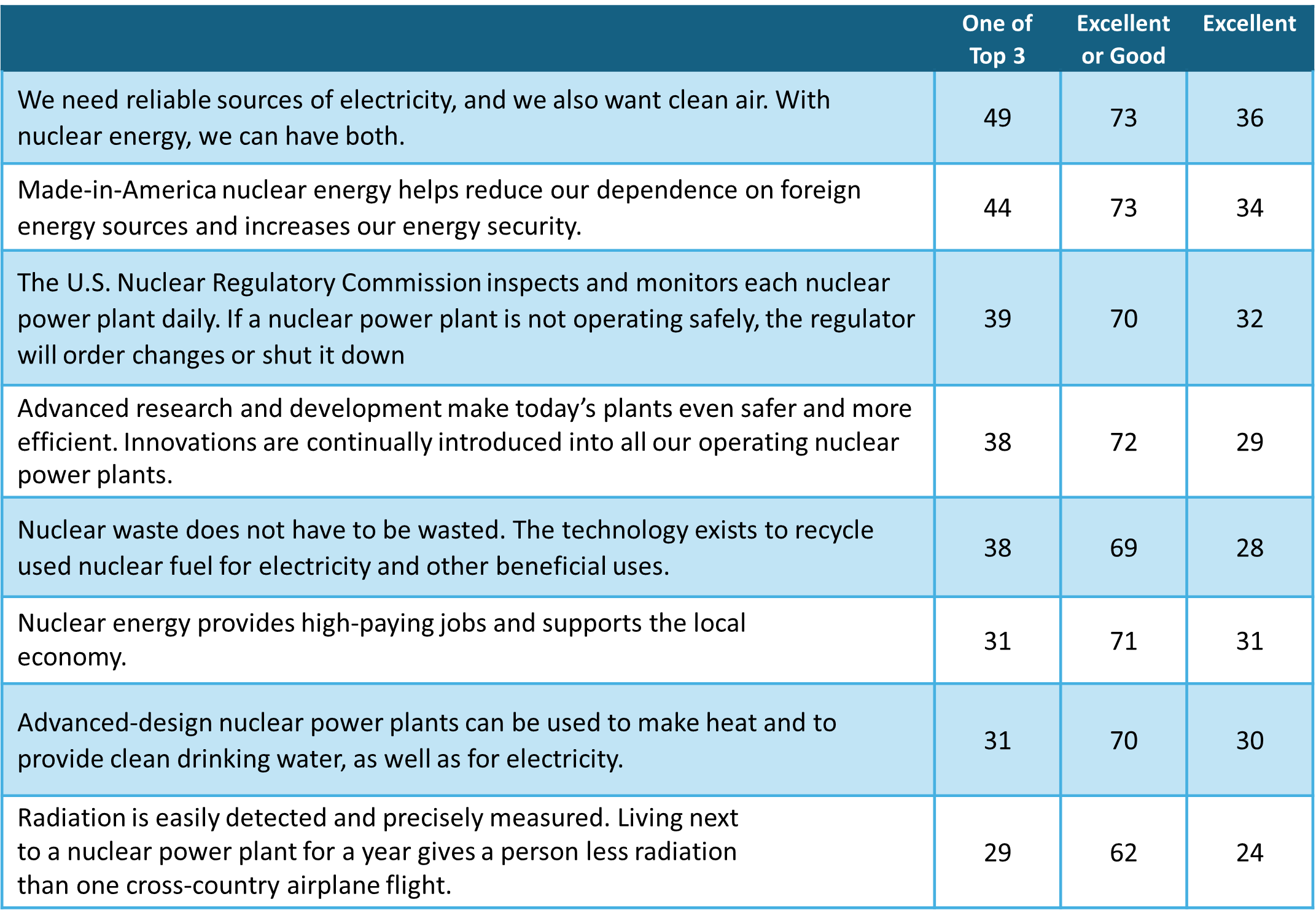
The current survey tested 8 messages that have rated well in previous assessments. They included 4 statements about beneficial attributes of nuclear energy and 4 statements about safety. The message about the offer of both reliability and clean air rated most favorably. Energy independence/energy security came next. Those were also the strongest messages about benefits.
The best messages about safety were about NRC monitoring, advanced research and innovation making our plants safer, and how nuclear waste does not have to be wasted.
Statements that Make the Strongest Case for Nuclear Energy: Top Three and Excellent/Good (2026)
Rate each of the following statements as a reason to support nuclear energy. (%)
Select three statements that, in combination, make the strongest case for nuclear energy. (%)
Surprisingly, although the messages rated well, they had little impact on attitudes. Strongly favor moved from 30% to 33%, but that hardly compares with the large impact of the question-and-factual-answer presentation as seen on page 15 (the percentage who strongly favored nuclear energy increased from 29% to 44%, and those opposed decreased from 28% to 15%).
Favorability to Nuclear Energy Before and After Seeing Statements (2026)
Thinking again, do you strongly favor, somewhat favor, somewhat oppose, or strongly oppose the use of nuclear energy as one of the ways to provide electricity in the United States? (%)
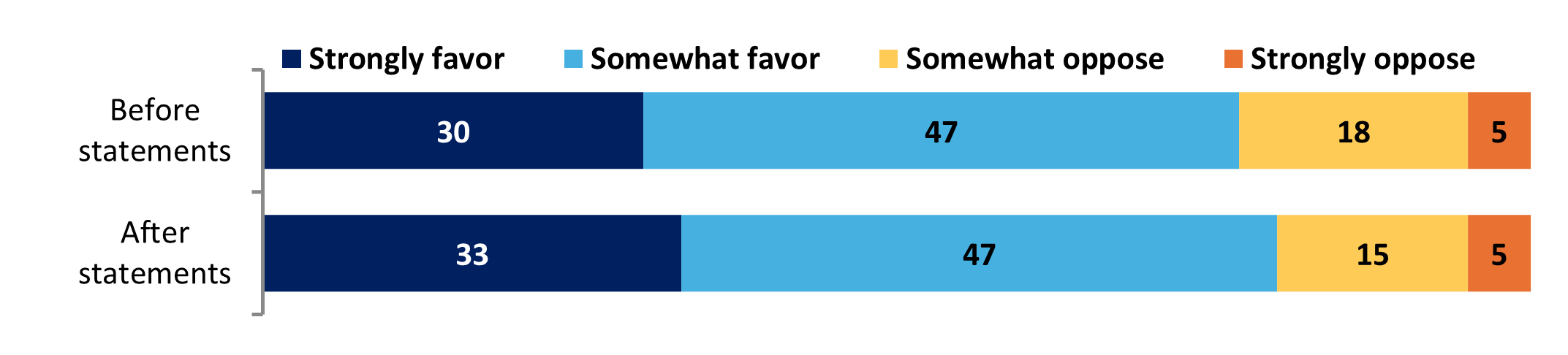
In both the 2025 and 2026 surveys, the link between clean and reliable proved to be a powerful attribute of the nuclear energy brand. The difference in persuasion suggests that factual information shown graphically with data and references is more effective than words alone, especially in this era of distrust.
A question and answer format also can be persuasive, as observed not only in the 2025 survey but also in focus groups. Moreover, our previous research concludes that it is best not to lead communications with safety messages. Even though the safety messages shown in 2026 rated well, they may have triggered some lingering thoughts of danger.
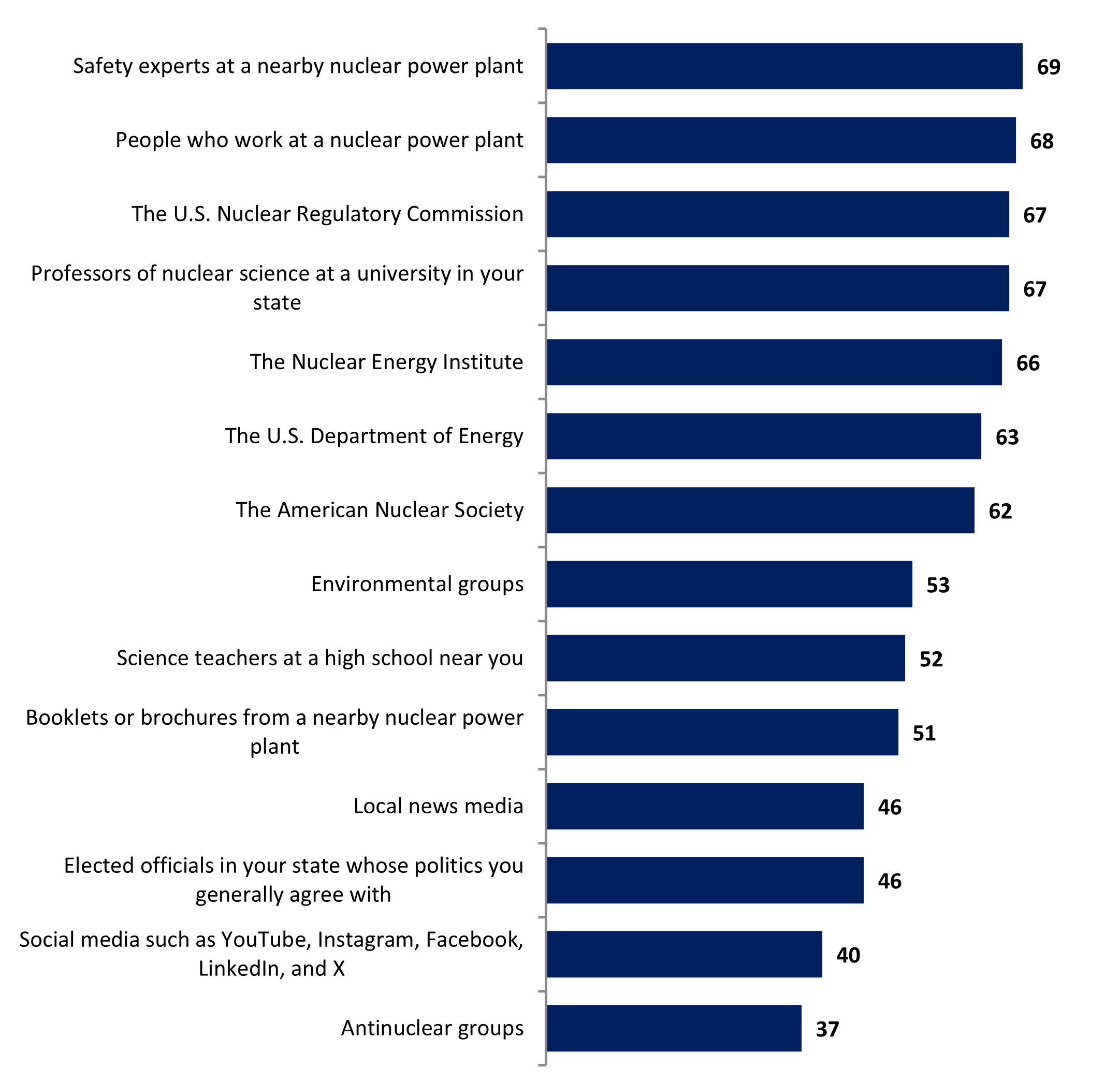
Nuclear experts trusted most for information. As always, nuclear scientists and engineers topped the list of sources that the public sees as best for accurate and reliable information about nuclear energy. See next page. The top sources are safety experts at a nearby nuclear power plant, the U.S. Nuclear Regulatory Commission, professors of nuclear science at a university in your state, people who work at a nuclear power plant, and the Nuclear Energy Institute.
Antinuclear groups, social media, and elected officials “in your state whose politics you generally agree with” were rated lowest. These findings are consistent over time, but also consistent with the public’s current distrust of information from public or political sources.
The names of organizations were included. The findings indicate a level of credibility or expertise suggested by the names, not necessarily any familiarity with these organizations.
Excellent or Good Sources of Accurate Information about Nuclear Energy (2026)
Please rate each of the following as a source of accurate information about nuclear energy. (%)
Is Nuclear Energy in the News?
Although most Americans feel inadequately informed about nuclear energy and many are not fully aware of its beneficial attributes, half the public reports that they heard something about nuclear energy during the past year or so. Among the topics:
That nuclear energy is needed,
That new plants use advanced technology, and
That companies are planning to use nuclear power plants to supply electricity to data centers.
Percent Heard about Topics in the Past Year (2026)
One last question: Have you heard anything about the following topics during the past year or so? (%)
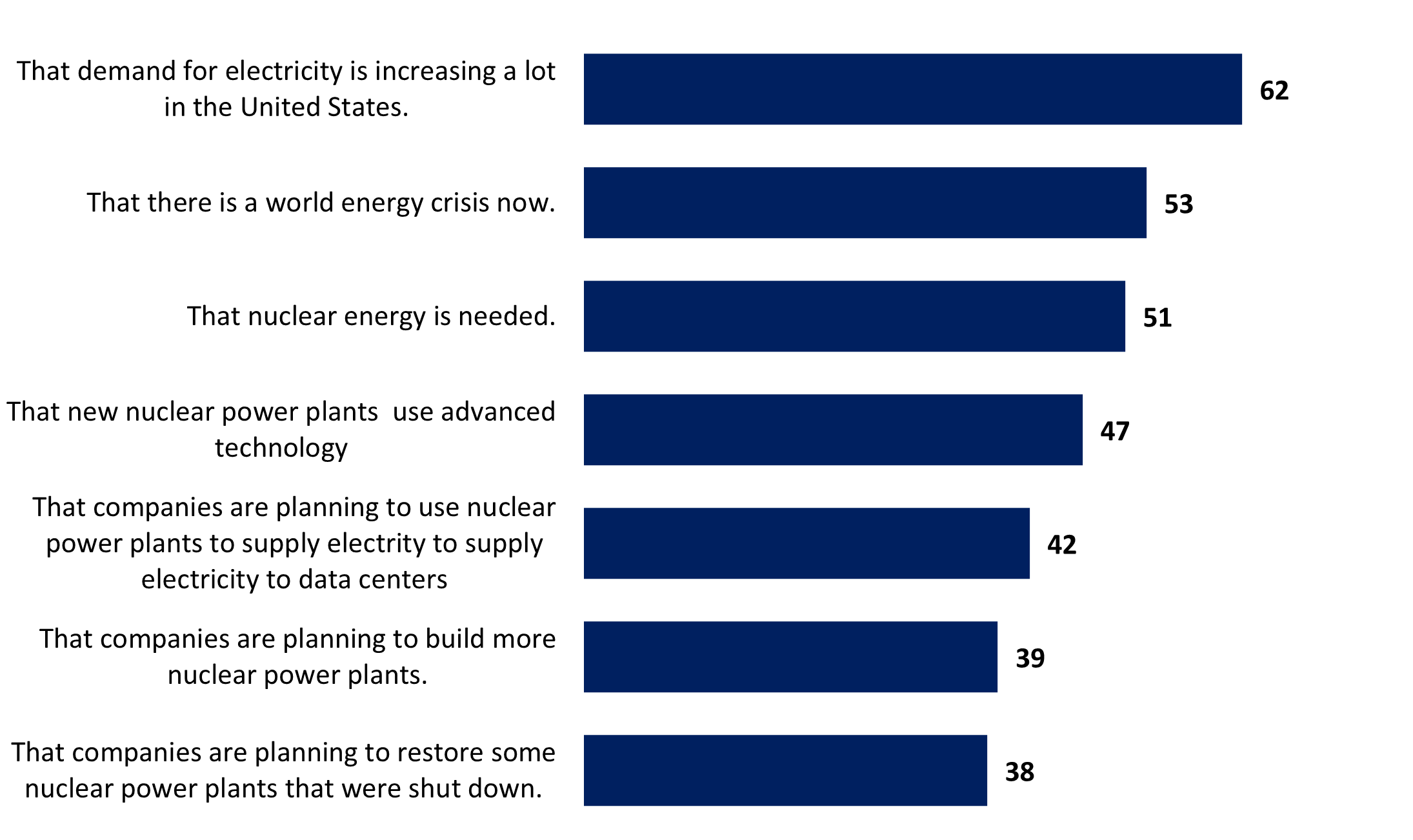
Word about nuclear energy is breaking through the news, even as more communication is needed to bring its assets into clearer focus.
Conclusions
Favorability to nuclear energy historically is associated with concerns about energy. Rising concerns about energy put current favorability toward nuclear energy equal to an all-time high. However, a majority of the U.S. public remains in the middle, with uncertain and highly changeable opinions. Of persons with strong opinions, those who are favorable outnumber those opposed by a 6-to-1 margin. Of those who feel very well informed about nuclear energy (just 14% of the public), 75% strongly favor nuclear energy compared with just 4% who are strongly opposed.
The survey,like so many in past years, reveals a public that sees nuclear energy as important for the future but has limited awareness of its unique strengths. Learning that nuclear energy offers both reliability and clean air is particularly persuasive. However, words alone are insufficient in this moment of national distrust.
The 2026 survey tested messages about both benefits and safety. All were highly rated. The combination of reliability and clean air rated highest. Yet hearing the 8 highly-rated messages had little impact on attitudes toward nuclear energy.
Instead, information presented in 2025 showing that nuclear energy is the most reliable clean energy resulted in large attitude change. A question-and-answer format in the 2025 information likely helped to convey that the information was factual and not just an assertion. It is also possible that the highly-rated messages in 2026 were less persuasive because they included safety messages. Including safety messages, even those judged good or excellent, may trigger thoughts of danger. Nevertheless, it is clear that the fact that nuclear energy is the most reliable clean air energy (by far) is surprising and, when shown graphically with referenced data, powerfully strengthens favorable opinion of nuclear energy.
[2] 2021-2023 question wording was slightly different: Our nation should prepare now so that advanced-design nuclear power plants will be available to provide electricity.
[3] https://news.gallup.com/poll/708620/less-support-solar-wind-energy-nuclear.aspx
[4] www.bisconti.com, 9th National Survey of Nuclear Power Plant Neighbors. Reverse NIMBY: Nuclear Power Plant Neighbors Say “Yes” (national surveys of residents within the 10-mile radius of U.S. nuclear power plants)
[5] www.bisconti.com, 9th National Survey of Nuclear Power Plant Neighbors. Reverse NIMBY: Nuclear Power Plant Neighbors Say “Yes” (national surveys of residents within the 10-mile radius of U.S. nuclear power plants)
© Ann Stouffer Bisconti, 2026.